


Why in the News?
Recently, the chief of the World Trade Organization (WTO) highlighted the need to reform the Global Trading System.
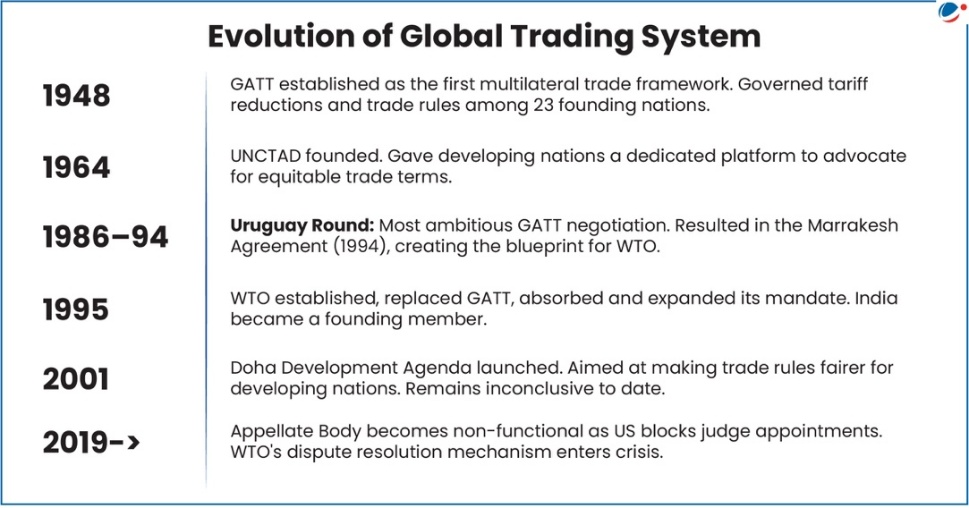
Why the Global Trading System Needs Reform?
The current system is under pressure from four distinct directions:
- The Geopolitical Pivot:
- Protectionism: Policies like "Make America Great Again" (MAGA) use tariffs as weapons, sparking trade wars (e.g., US-China) that hinder developing nations.
- Fragmented Trade: Priorities have shifted from "lowest cost" to national security and strategic autonomy.
- New Shoring: Global Value Chains are moving toward Friend-shoring (allies) and Near-shoring (geographical proximity).
- Logistical & Supply Chain Fragility:
- The "Efficiency" Trap: Decades of Just-In-Time (JIT) manufacturing created brittle chains with zero buffer for shocks.
- Choke Points: Conflicts in the Red Sea and Strait of Hormuz force expensive rerouting around the Cape of Good Hope, causing delays and inflation.
- Emerging "Green" & "Digital" Barriers:
- Green Protectionism: Measures like the EU's Carbon Border Adjustment Mechanism (CBAM) act as unilateral trade barriers against developing states like India.
- Regulatory Chaos: A lack of unified rules for AI and cross-border data hinders the potential of the digital economy.
- Regionalism: The rise of blocs like RCEP threatens to bypass and undermine the universal multilateral system.
- Institutional Paralysis (The WTO Crisis): The WTO is facing a severe institutional crisis, primarily due to the Dispute Settlement Impasse. (see box below)
Key Issues with WTO |
|
|
|
|
|
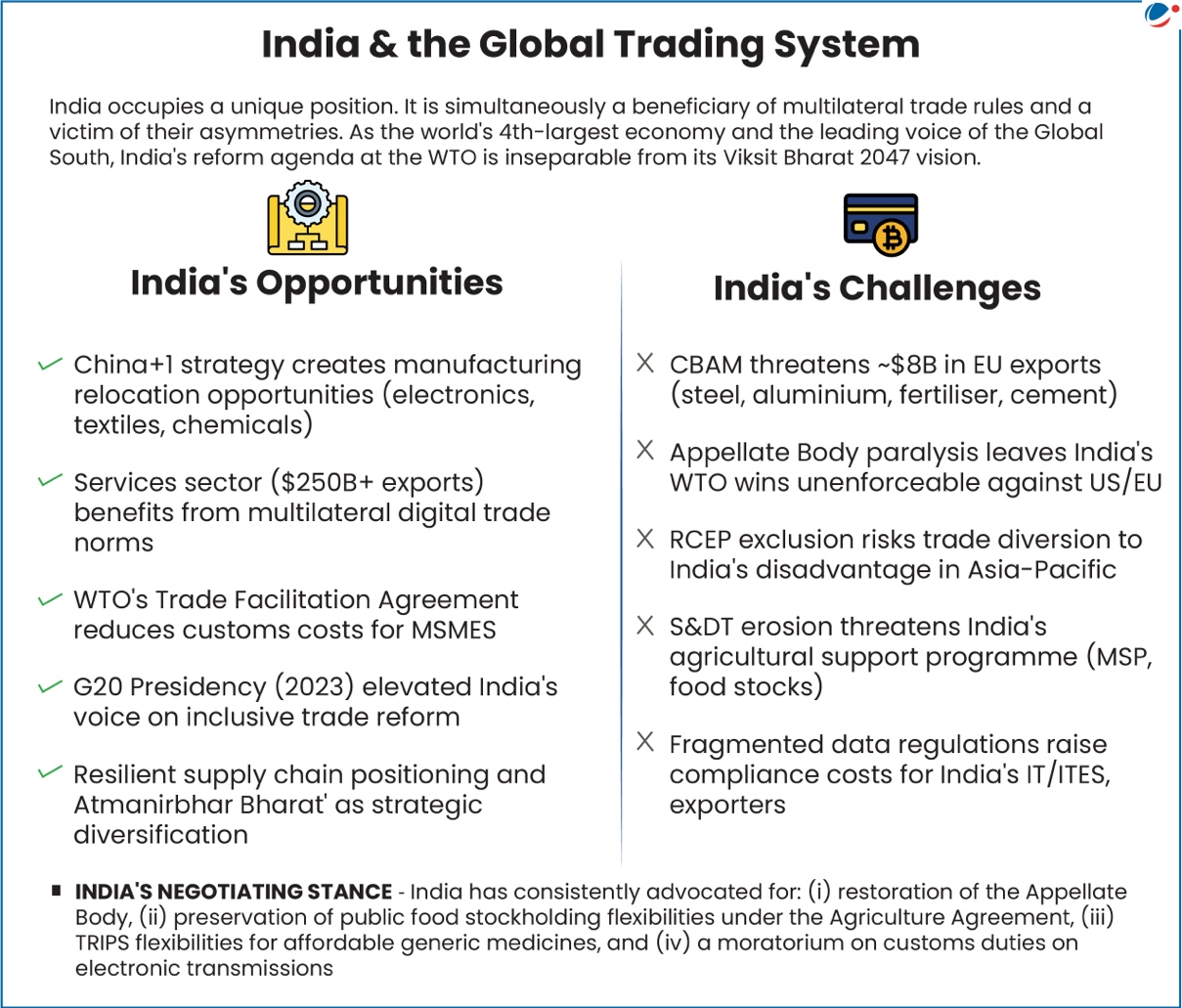
Ways to Strengthen the Global Trading System
- Qualified majority voting : Transitioning from full consensus to a qualified majority voting system for appointing Appellate Body members could prevent individual nations from blocking the process and paralyzing the system
- Reduce Protectionist Measures: Countries should limit tariffs, quotas, and subsidies that distort trade.
- Strengthening the institutional capacity of the WTO can ensure effective resolutions of the trade wars arising due to imposition of unilateral tariff imposition, etc.
- Harmonizing Trade Rules with Climate Action: Trade policy must be leveraged to accelerate the green transition without resorting to disguised trade barriers such as CBAM.
- Formulating Rules for Digital Trade: Establishing global norms for e-commerce, cross-border data flows, and digital taxation can regulate the rapidly growing digital economy. E.g., WTO Agreement on Electronic Commerce.
Conclusion
Global trading system remains a cornerstone of international economic cooperation but is increasingly strained by geopolitical tensions, protectionism, and institutional challenges. Reforming the World Trade Organization and strengthening multilateral rules will be essential to ensure a fair, predictable, and resilient trading system. A reformed framework must also balance development needs, digital trade governance, and climate objectives to sustain inclusive global growth.

