


Why in the News?
Union Budget 2026-27 announced 'Biopharma SHAKTI (Strategy for Healthcare Advancement through Knowledge, Technology & Innovation)' to position India as a Global Biomanufacturing Hub.
About the Biopharma SHAKTI scheme
- Objective: Develop India into a global biopharmaceutical manufacturing hub by building the ecosystem for domestic production of biologics and biosimilars.
- Biologics are a class of medicines that are made from natural and living sources like animal and plant cells, and microorganisms.
- These include vaccines, blood and blood components, somatic cells, gene therapy, proteins etc.
- Biosimilars are copies of biologics that are highly similar to biologics and have no clinically meaningful differences from the reference product.
- Biologics are a class of medicines that are made from natural and living sources like animal and plant cells, and microorganisms.
- Funding: Outlay of ₹ 10,000 crores over the next 5 years.
- Strategy:
- Biopharma-focused network with 3 new National Institutes of Pharmaceutical Education and Research (NIPER) and upgrading 7 existing ones.
- Creating a network of over 1000 accredited India Clinical Trials sites.
- Strengthening the Central Drugs Standard Control Organisation (CDSCO) to meet global standards and approval timeframes through a dedicated scientific review cadre and specialists.
About the Biopharma and Bioeconomy
- Definition: Biopharma or biopharmaceuticals involves production, manufacturing, or extraction of therapies through biological organisms, such as human cells, fungi, or microbes.
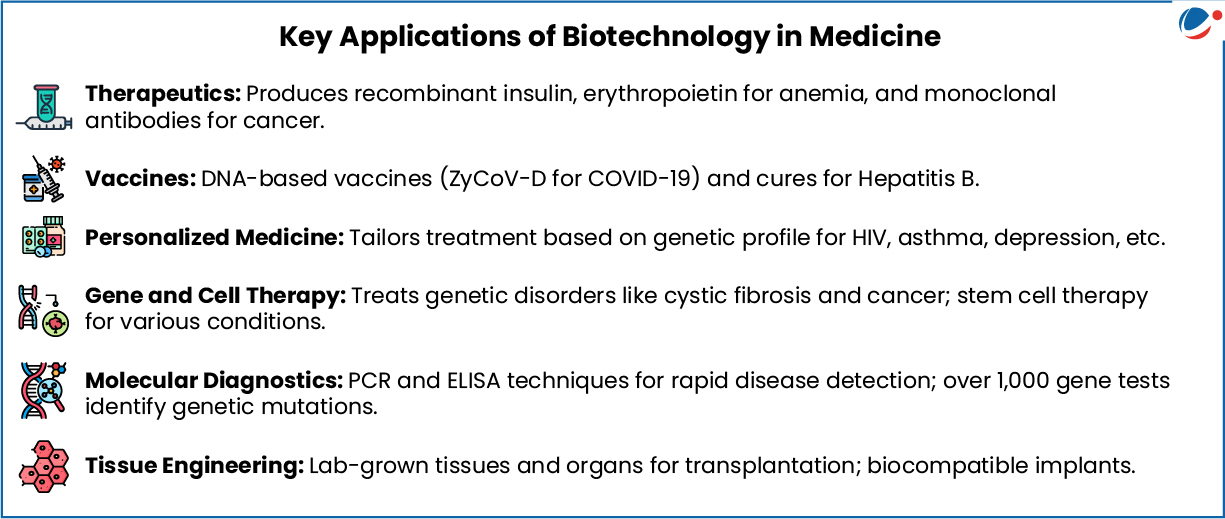
- Examples: Some of the most widely used modern medicines fall under biopharma includes vaccines, antibody treatments, gene therapies, cell implants, modern insulin, and recombinant protein drugs.
- Biopharmaceuticals are pharmaceutical products that are produced using biotechnology techniques.
- Biopharma is subsector of the larger economic sector called as Bioeconomy.
- Bioeconomy uses renewable resources like plants, animals, and microorganisms to produce food, energy, and industrial goods.
- India's bioeconomy grew from USD 10 billion (2014) to USD 165.7 billion (2024), targeting USD 300 billion by 2030.
- It contributes 4.25% to the national GDP.
- India's bioeconomy is powered by four key subsectors: BioIndustrial (47%), BioPharma (35%), BioAgri (8%), and Bioresearch (9%).
- Bioeconomy uses renewable resources like plants, animals, and microorganisms to produce food, energy, and industrial goods.
Challenges of the biopharmaceutical industry in India
- Complex Regulatory Hurdles
- Multiple agencies: Industry is governed by multiple agencies, including the CDSCO and various state drug control authorities with slow regulatory approval processes.
- International compliance: Internationally, meeting the stringent standards of bodies like the US FDA and European Medicines Agency (EMA) is both resource-intensive and time-consuming.
- High R&D Costs: Developing a new drug in India can cost up to $800 million taking 8-10 years.
- Supply Chain Vulnerabilities: Industry is heavily dependent on imported Active Pharmaceutical Ingredients (APIs), primarily from China, making the industry vulnerable to geopolitical tensions or global crises.
- Patent Conflicts: Conflicts with multinational pharmaceutical companies over patent rights and patent "evergreening" are frequent, leading to costly and time-consuming legal battles.
- Evergreening is a strategy used by pharmaceutical companies to extend the patent protection of brand-name drugs nearing expiration, often by making minor, non-essential modifications to the original product.
- Price Controls: Government-imposed price caps on essential medicines through the Drug Price Control Order (DPCO) based on the National List of Essential Medicines (NLEM) restrict profitability and impact new research.
Initiatives taken to boost biopharmaceuticals
- The National Biopharma Mission (NBM) – Innovate in India (i3): Co-funded by the World Bank and implemented by the Biotechnology Industry Research Assistance Council (BIRAC) under the Department of Biotechnology (DBT).
- Focuses on the development of new vaccines, bio-therapeutics, diagnostics and medical devices
- Production Linked Incentive (PLI) Scheme for pharmaceuticals: It incentivises the domestic manufacturing of critical Active Pharmaceutical Ingredients (APIs), medical devices, etc.
- Promotion of Bulk Drug Parks: Supported by an outlay of ₹3,000 crore, three world-class bulk drug parks are being developed in Gujarat, Himachal Pradesh, and Andhra Pradesh.
- Promotion of Research and Innovation in Pharma-MedTech (PRIP) scheme: Launched in 2023 to fund early- and late-stage R&D in biosimilars etc.
- BioE3 Policy: Focuses on establishing biomanufacturing, Bio-AI hubs and Biofoundry to address climate, food, and health challenges.
- Regulatory Reforms: To attract capital and technology, the government permits up to 100% FDI through the automatic route for Greenfield pharmaceutical projects, and up to 74% for Brownfield projects.
Way forward
- Targeting Niche Therapies: Indian biopharma can pivot toward high-value, underserved markets such as rare and orphan drugs leveraging the country's growing AI and genomic capabilities.
- R&D Incentives: Similar to Brazil and Chile, India should can targeted incentives specifically for multinational enterprises establishing advanced Research and Development (R&D) strategic sectors like biotechnology.
- Private sector participation: The Anusandhan National Research Foundation (ANRF) and the Research, Development & Innovation (RDI) Fund can be utilised to crowd-in private R&D, provide strategic direction, and translate research into scalable industrial capacity.
- Fast-Track Licensing: May emulate Vietnam's "Decree 19," which establishes special investment procedures to streamline licensing for high-tech industries.
- Shared Infrastructure: India can establish and leverage Translational Research Centres (TRCs) as shared national assets.

