
NGT orders classification of Nainital town based on carrying capacity and environmental sensitivity | Current Affairs | Vision IAS
MENU
Home

Periodically curated articles and updates on national and international developments relevant for UPSC Civil Services Examination.

Quick Links

High-quality MCQs and Mains Answer Writing to sharpen skills and reinforce learning every day.

Watch explainer and thematic concept-building videos under initiatives like Deep Dive, Master Classes, etc., on important UPSC topics.

ESC

The order was issued by National Green Tribunal (NGT) while hearing a case of unauthorised large-scale tree cutting, allegedly harming the forest areas and affecting recharging of Naini Lake.

Key Highlights of the Order

  • Classification of town into development or prohibited zone and regulated zones based on environmental conditions.
  • Rehabilitation of lakes: State government was directed to implement catchment area treatment plans for lakes in the district.
  • Creation of master plans and determination of carrying capacity of Nainital based on factors such as hydrology, sanitation load bearing, vegetation and current tourism trends.

What is Carrying Capacity?

  • It refers to the maximum threshold of population an area can bear in relation to the available resources.
  • It depends on both biotic (e.g. vegetation, hydrology) and abiotic (e.g. terrain, climate) factors.
  • Two major approaches for assessing Carrying Capacity:
    • Planetary boundaries approach: Applied in the context of environmental crises such as global warming, land degradation, pollution, water stress.
    • Biocapacity Overshoot approach: It is a sustainability metric about the demand humans put on the earth systems by consuming total annual productivity of natural systems within a few months every year. e.g., Earth Overshoot Day.
  • Significance: Carrying capacity assessment based on precautionary principles (refer infographic) provides the option to practically deal with the tussle between ‘developmental governance’ and ‘sustainability of development’.
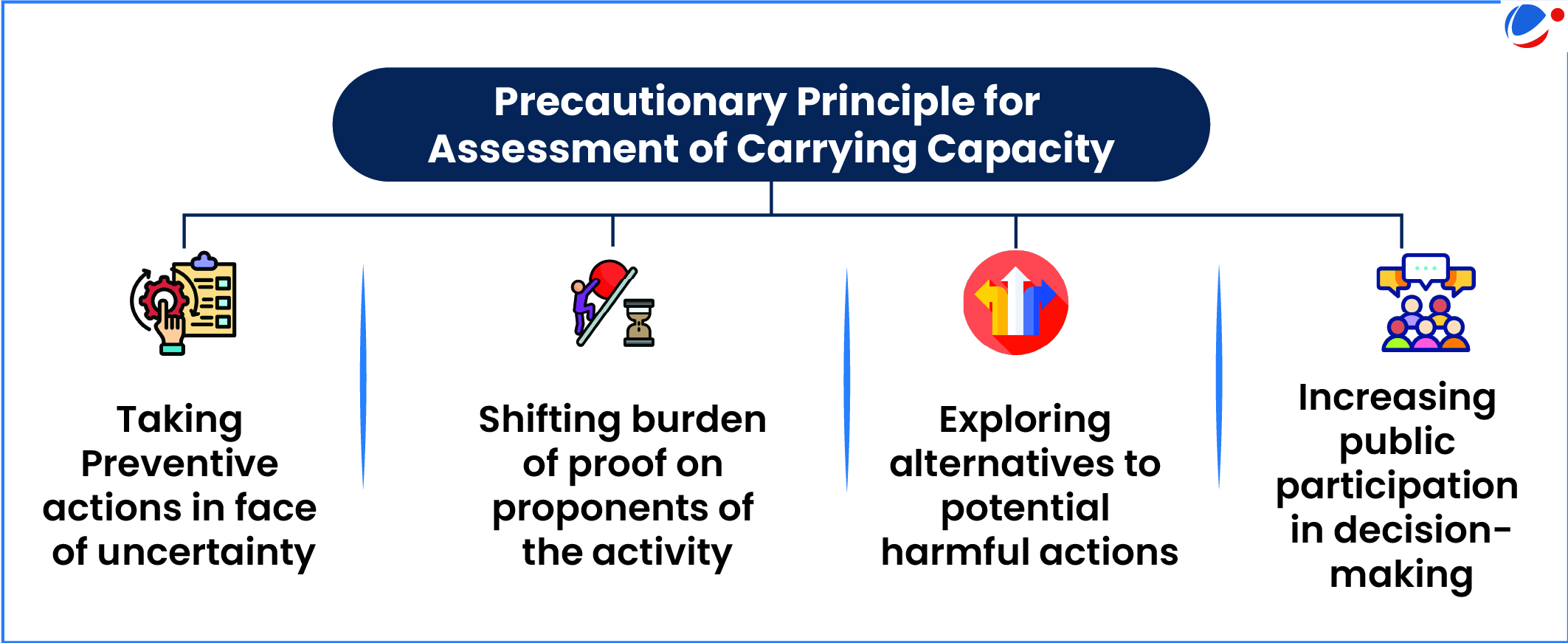
An infographic image showing "Precautionary Principle for Assessment of Carrying Capacity." It highlights four key points: Taking Preventive Actions in the Face of Uncertainty, Shifting the Burden of Proof on Proponents of the Activity, Exploring Alternatives to Potential Harmful Actions, and Increasing Public Participation in Decision-Making.
Watch Video News Today

Explore Related Content

Discover more articles, videos, and terms related to this topic

RELATED VIDEOS

3
News Today (Sep 22-23, 2024)

News Today (Sep 22-23, 2024)

YouTube HD
Carbon Markets

Carbon Markets

YouTube HD
What is Artificial Rain? | Deep Dive With VisionIAS

What is Artificial Rain? | Deep Dive With VisionIAS

YouTube HD
Title is required. Maximum 500 characters.

Search Notes

Filter Notes

Loading your notes...
Searching your notes...
Loading more notes...
You've reached the end of your notes

No notes yet

Create your first note to get started.

No notes found

Try adjusting your search criteria or clear the search.

Saving...
Saved

Please select a subject.

Referenced Articles

linked

No references added yet