


Why in the news?
Recently, a comprehensive report on the National AYUSH Mission (NAM) has been released by the Parliamentary Standing Committee on Health and Family Welfare.
About National AYUSH Mission (NAM)
- A centrally sponsored scheme.
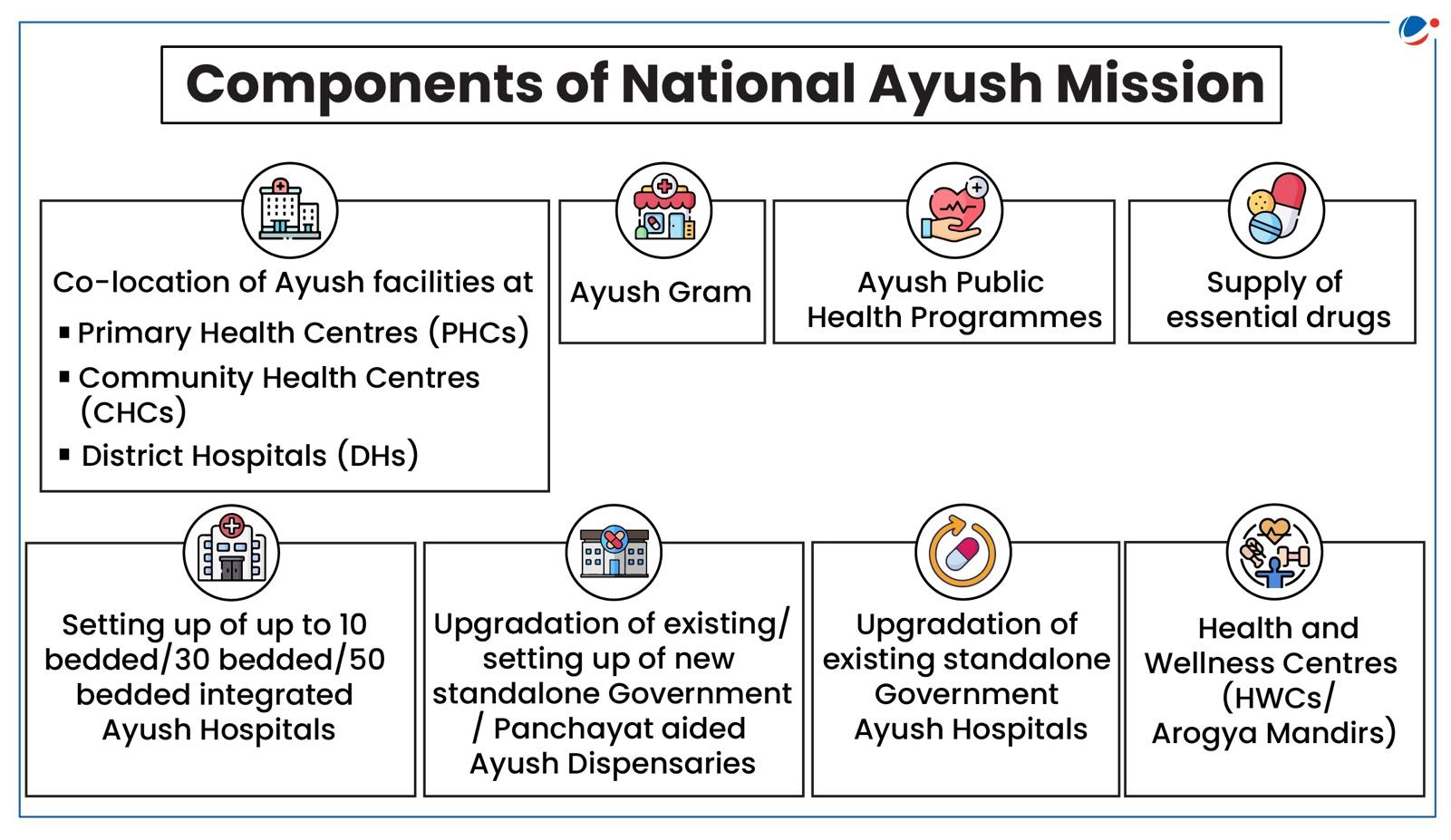
- Launched by the Ministry of Ayush in 2014 to focus on developing, educating, and propagating India’s traditional medical systems- Ayurveda, Yoga & Naturopathy, Unani, Siddha, Sowa-Rigpa, and Homoeopathy (AYUSH).
- Objective:
- Increasing accessibility to Ayush services
- Promoting the cultivation of medicinal plants used in these systems
- Strengthening educational institutions for Ayush
- Creating awareness about the benefits of Ayush practices
- Tenure: Till 2026
- Achievements of NAM: 8.42 Crores beneficiaries availing Ayush services in 2022-23 (from 1.50 Crores in 2020-21).
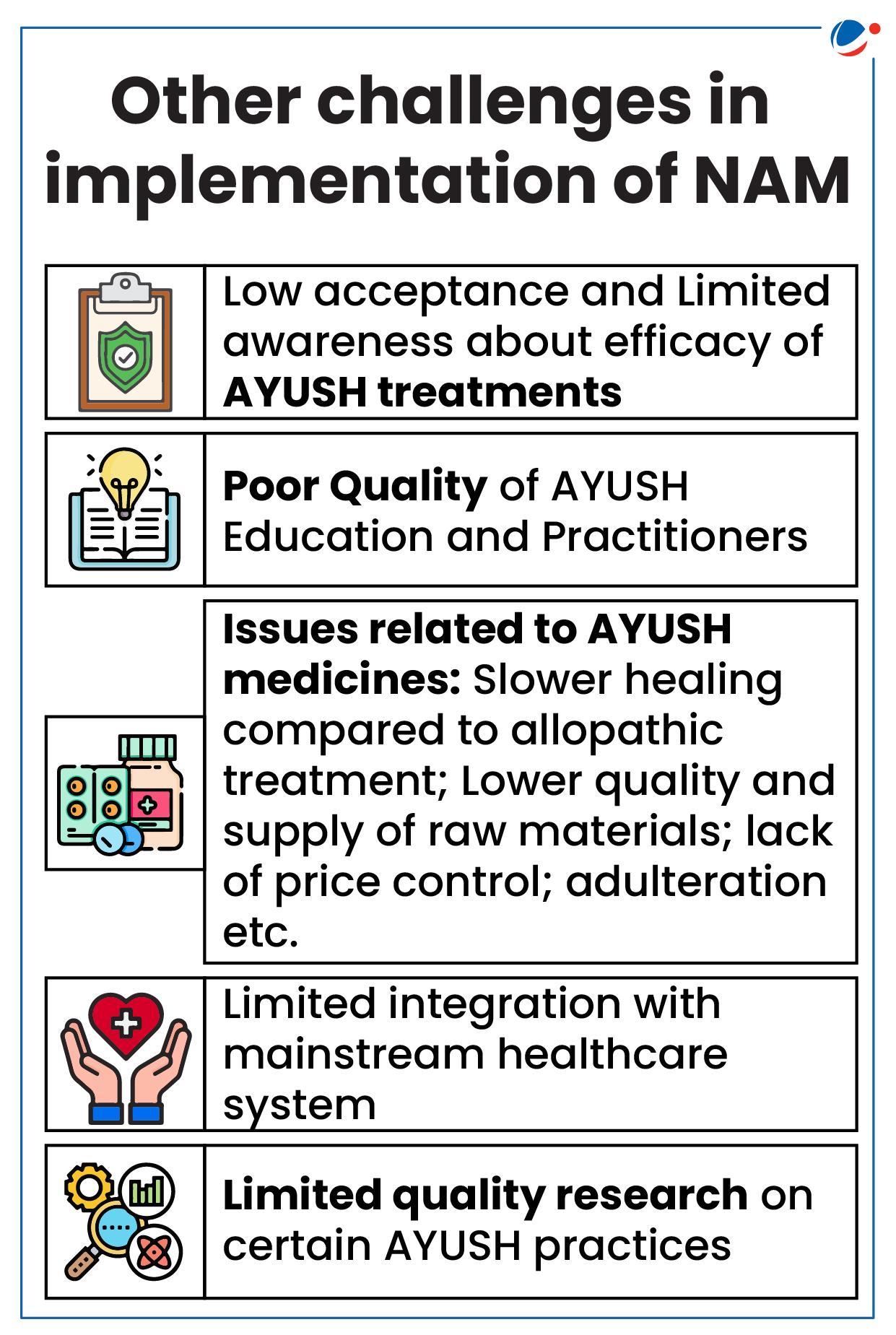
Challenges highlighted by the Report
- Underutilization of Fund: As per Revised Estimates for 2022-23, only about 85% funds were utilized.
- Concerns related to quality of the medicines: Concerns have been raised over the high metal contents in the Ayush drugs, which damage people's health.
- Infrastructural Delays: 69% of the integrated Ayush hospitals approved under NAM are still either under construction or the construction has not started yet and only about 65% of the sanctioned A-HWCs have been established.
- Administrative Delays: Due to late allocation of funds, overlapping functions between entities, and delays in submitting Utilisation Certificates (UCs) etc.
- Inadequate administrative set-up of Ayush in States/UTs: Some states and UTs do not have a separate Department of Ayush.
- Exclusion of SowaRigpa from the National Ayush Mission.
Way Forward: Recommendations of the report
- Deepening Quality Control and Standardization:
- Investing in advanced analytical labs and robust testing protocols
- Developing user-friendly systems for healthcare professionals and consumers to report adverse events related to Ayush medicines.
- Regular post-marketing surveillance of Ayush medicines to monitor real-world safety and efficacy.
- Harmonizing Ayush quality standards with international benchmarks like WHO.
- Boosting Research and Evidence-Based Practice
- Increasing funding for high-quality clinical research on efficacy and safety of Ayush therapies, focusing on chronic diseases and preventive care.
- Encouraging collaboration between Ayush and allopathic researchers.
- Utilizing patient data from local health centres to conduct large-scale epidemiological studies through measures such as upgrading infrastructure, training Ayush practitioners in research skills, and standardising data collection.
- Bridging the Integration Gap
- Developing clear referral pathways and collaborative protocols between Ayush and allopathic healthcare systems.
- Integrating Ayush practitioners into primary healthcare teams and community health campaigns.
- Overcoming delays through creating specific action plans for AHWCs, training programs for existing staffs, providing financial incentives to states for better implementation and streamlining processes through technology.
- Building Consumer Confidence and Advocacy through measures like-
- Launching nationwide awareness campaigns highlighting the scientific basis and benefits of Ayush.
- Promoting responsible advertising and patient education on the safe and effective use of Ayush medicines.
Case Study: Learnings from China's Traditional Chinese Medicine (TCM)
|




