


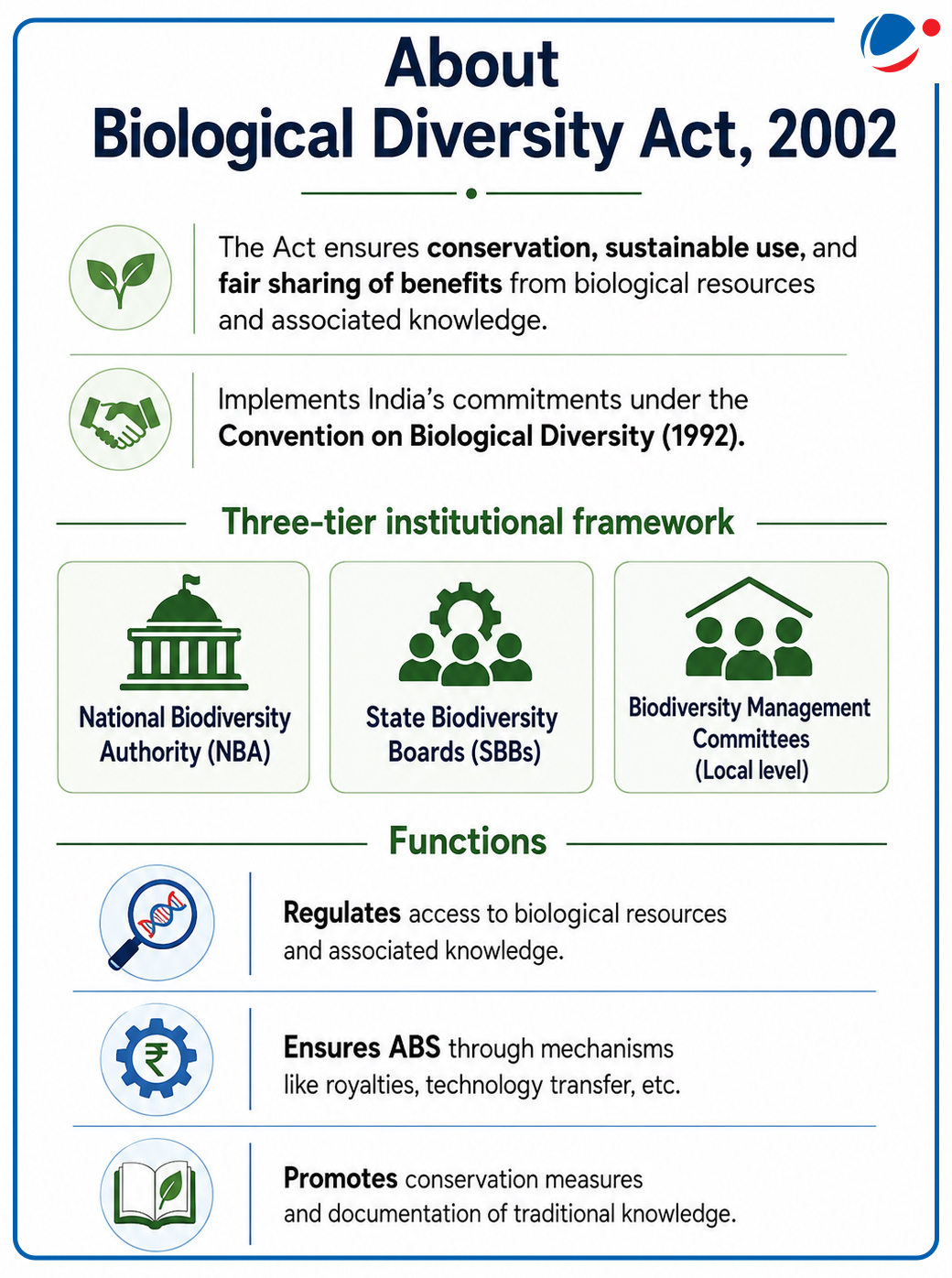
National Biodiversity Authority (NBA) strengthens implementation of Biological Diversity Act (BDA), 2002.
The new framework strengthens the BDA, 2002, through streamlining of Access and Benefit Sharing (ABS) fund use and revised repository guidelines
New Framework
- ABS Fund Utilisation
- Identifiable Sources:
- When resources are sourced from identifiable institutions or repositories, 25–40% of ABS funds go to them.
- The remaining 60–75% is shared with local communities via State Biodiversity Boards (SBBs) and Union Territory Biodiversity Councils (UTBCs).
- When resources are sourced from identifiable institutions or repositories, 25–40% of ABS funds go to them.
- Unidentifiable Origins: If resources are accessed from intermediaries or traders, the ABS funds will be utilized directly for biodiversity conservation and management.
- Identifiable Sources:
- Revised Repository Guidelines: Includes provisions like Promotion of digital records for traceability and identification.
What is Access and Benefit Sharing (ABS)?
- ABS refers to how genetic resources may be accessed and how the benefits resulting from their use are shared between the people/countries using the resources (users) and those that provide them (providers).
- Framework: Covered under the Convention on Biological Diversity (CBD).
- The Bonn Guidelines and Nagoya Protocol (2010) deal with the ABS.
- Along with BDA, 2002, it is regulated by Access and Benefit Sharing (ABS) Regulations 2025.
Article Sources
1 sourceGovernment has notified Referral Centre “Bhavasagara” and Agharkar Research Institute as National Repository for Deep-Sea Fauna under Biological Diversity Act 2002.
- “Bhavasagara” Referral Centre at the Centre for Marine Living Resources and Ecology (CMLRE) in Kochi, houses over 3,500 taxonomically identified and geo-referenced voucher specimens.
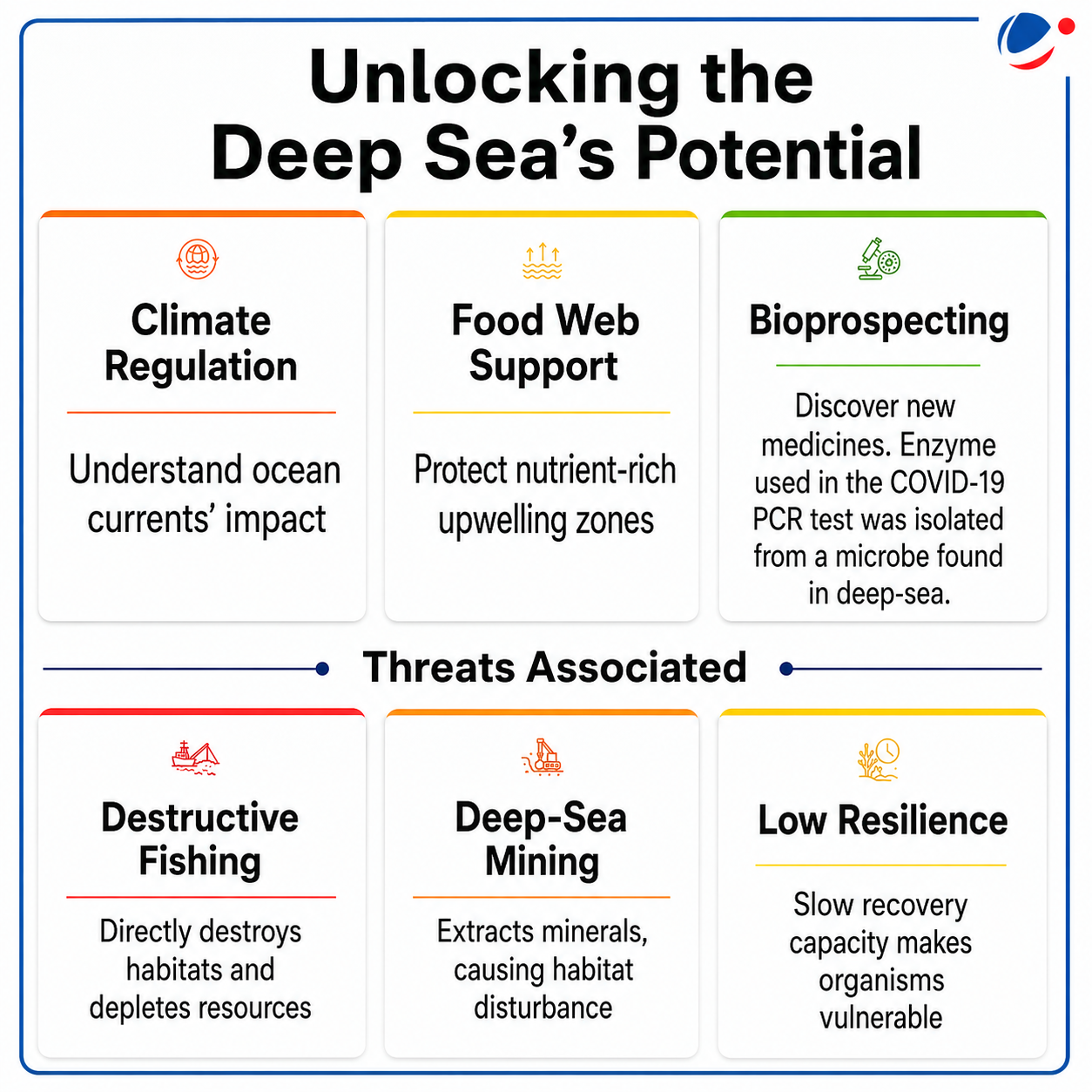
- Agharkar Research Institute Pune, for its collection of Microorganisms and National Fungal Culture Collection.
- Under the Biological Diversity Act, the repository will securely preserve biological samples, act as custodian of newly discovered deep-sea species, and build expertise in deep-sea taxonomy aligned with the UN Decade of Ocean Science (2021–2030).
About the Deep Sea
- Definition: Refers to ocean regions below 200 meters, extending from the twilight zone to the abyssal plains and deep seabed.
- It is the oldest and largest biome on Earth, constituting nearly 90–95% of Earth’s habitable space.
Global Frameworks Protecting the Marine Environment
- UNCLOS: Global legal order to protect the marine environment and manage the equitable utilization of ocean resources.
- Convention on Biological Diversity: Promotes the conservation of biodiversity, sustainable use of its components, and equitable sharing of genetic resource benefits.
- SDG 14: Focuses on conserving "Life Below Water”.
- High Seas Treaty (BBNJ Agreement): Legally binding, it protects waters outside national jurisdictions.
Shekha Jheel Bird Sanctuary became India’s 99th Ramsar site.
- Ramsar sites refer to sites listed on the List of Wetlands of International Importance under the Ramsar Convention (1971).
About Shekha Jheel Bird Sanctuary
- Location: Aligarh (Uttar Pradesh)
- It is a freshwater perennial water body that came into existence after the formation of the Upper Ganges Canal in 1852.
- Notable birds: Indian river tern (Sterna aurantia) and sarus crane (Grus antigone).
- It is designated as an Important Bird and Biodiversity Area (IBA) by BirdLife International.
The scheme will continue during the 16th Finance Commission period (2026–27 to 2030–31) with an estimated cost of ₹2183 crore, fully funded by the government.
About RBM Scheme:
- Launched: In 2014 as a Central Sector Scheme.
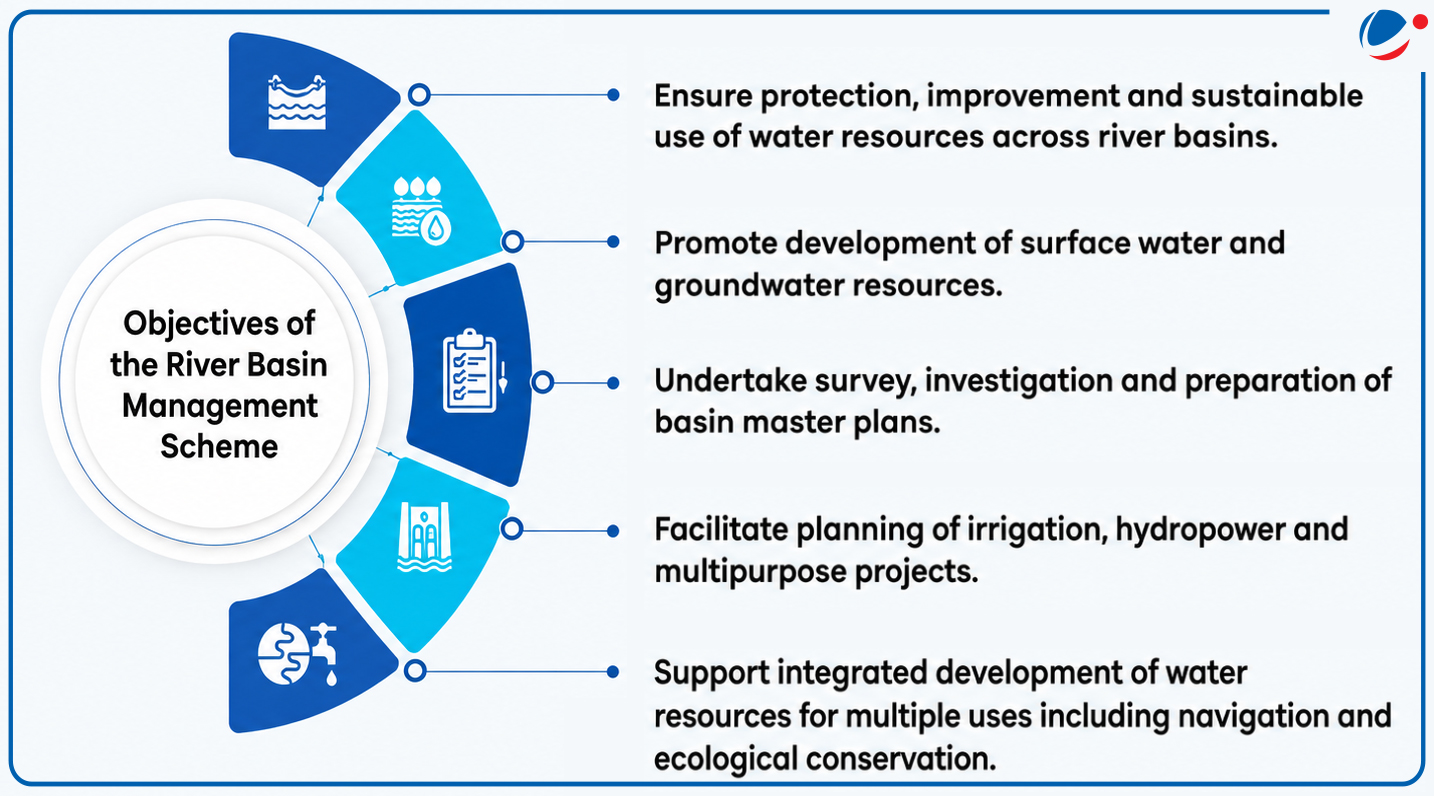
- Objectives: (Refer infographic).
- Administered by: Department of Water Resources, River Development, and Ganga Rejuvenation under the Ministry of Jal Shakti.
- Geographical Scope and Priority Areas: strategically important and water-rich but underdeveloped regions, particularly North Eastern Region and Indus Basin in Jammu & Kashmir / Ladakh.
- These basins are prioritised due to their importance in National water security, Cross-border water management, Flood control and erosion management and Ecological stability.
- Institutional Structure: two broad components-
- The Brahmaputra Board: for basin-level planning and flood management in the North Eastern Region.
- Investigation of Water Resources Development Scheme (IWRDS): implemented through
- Central Water Commission (CWC): undertakes surveys, investigations, and preparation of Detailed Project Reports (DPRs) for water resource projects such as Indus, Brahmaputra basins.
- National Water Development Agency (NWDA): focuses on water resource planning at the national level, particularly under the Interlinking of Rivers (ILR) programme.
Key Areas of Action under RBM Scheme:
|
Article Sources
1 sourcePlastic Waste Management (Amendment) Rules, 2026 have been notified by the Government.
- These rules amend the Plastic Waste Management Rules, 2016, notified under the Environment (Protection) Act, 1986.
Key Changes in 2026 Amendment Rules
- Mandatory Recycled Content: Producers, importers, and brand owners must use progressively higher amounts of recycled plastic in their packaging (e.g., Category I targets scale from 30% in 2025-26 to 60% from 2028-29 onwards).
- Exemptions apply if statutory bodies (like FSSAI or CDSCO) prohibit recycled plastic for specific uses.
- Unfulfilled 2025-26 targets for food contact applications can be carried forward for up to three years.
- Clearer Definitions: The amendment explicitly defines terms like "end of life disposal," "reuse," and "Plastic Waste Processors" to remove regulatory ambiguities.
- Reuse obligations: Minimum reuse targets for Category I rigid plastic packaging (e.g., large drinking water containers up to 85%).
- Strict Standards: Recycled packaging must conform to the Indian Standard IS 14534:2023 and bear specific labels indicating recycled content.
- Governance & enforcement: Decentralised enforcement by Urban Local Bodies (ULBs) with monitoring through State committee; digital tracking and audit by Registered Environment Auditor.
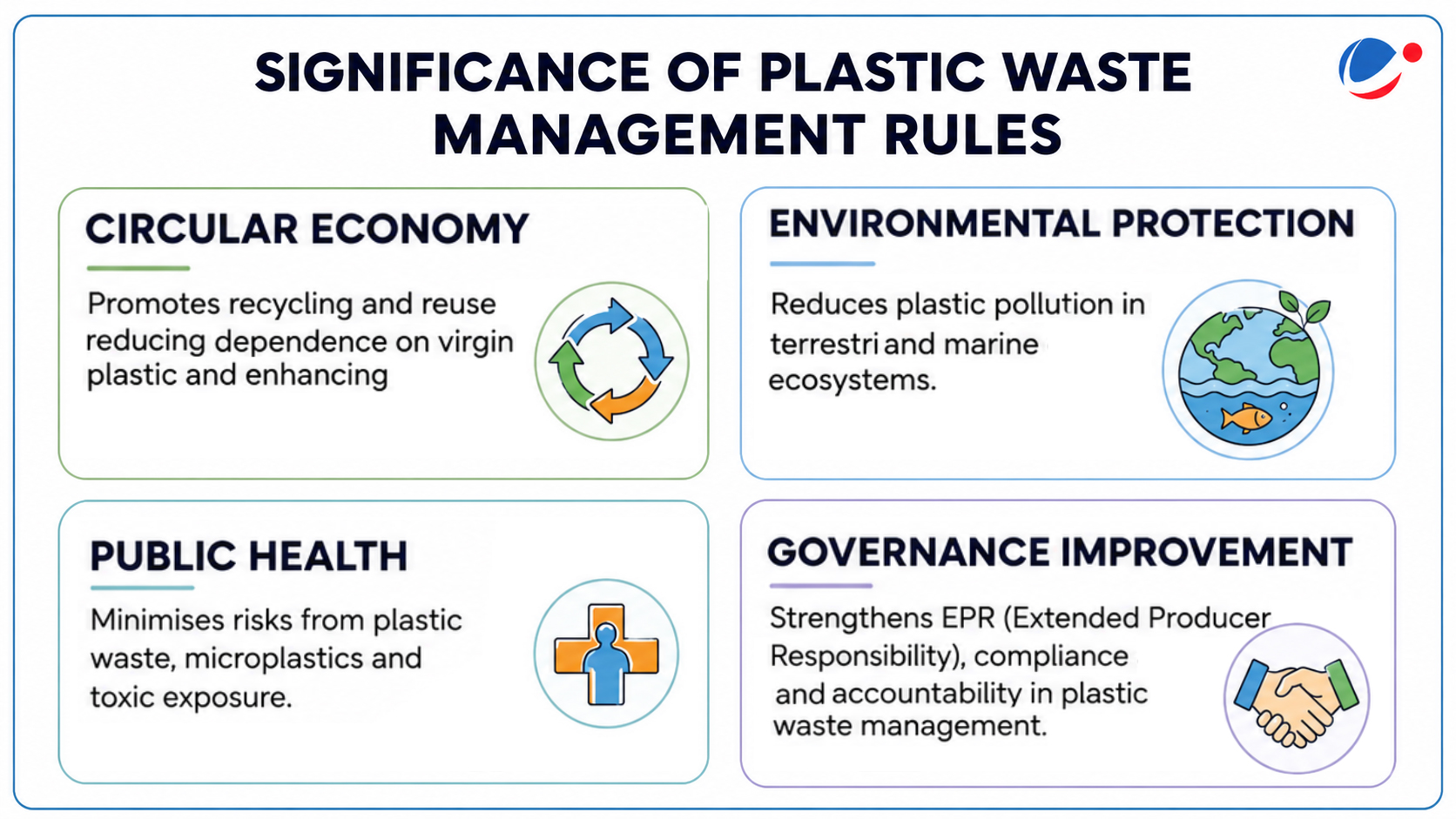
Plastic Waste Management Rules, 2016
|
Ministry of Environment, Forest and Climate Change directed all state and Central authorities to stop granting environmental clearances for HFCs production for new or additional HFC production beyond December 31, 2027.
- This direction is in line with India’s commitments under the Kigali Amendment.
Kigali Amendment (2016)
- Under it, Parties to the Montreal Protocol, agreed to phase down production and consumption of HFCs.
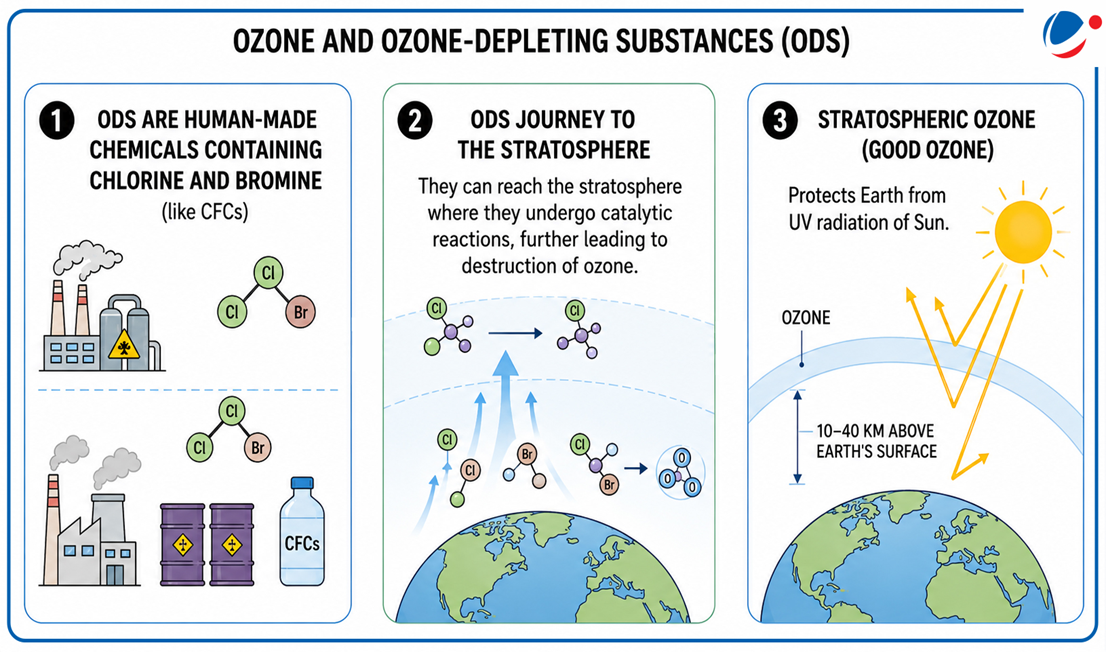
- HFCs were introduced as non-ozone-depleting substitutes for ozone-depleting substances (ODS); however, despite being ozone-friendly, they have high Global Warming Potential (GWP: 12–14,000).
- Key Targets:
- Parties agreed to reduce HFCs by 80–85% by the late 2040s.
- India will complete its phase-down of HFCs in 4 steps from 2032 onwards with cumulative reduction of 10% in 2032, 20% in 2037, 30% in 2042 and 85% in 2047.
Montreal Protocol (1987)
- An international treaty to phase out ODS for the protection of the ozone layer.
- Implemented under Vienna Convention (adopted in 1985).
- Substances Covered: Targets ODS such as Chlorofluorocarbons (CFCs), Hydrochlorofluorocarbons (HCFCs), and Halons.
- By 1992, it had been universally ratified and put into practice the principle of Common but Differentiated Responsibilities.
- Kalai-II HEP (Arunachal Pradesh): Located on Lohit River, a major tributary of the Brahmaputra, originating in eastern Tibet and flowing through Arunachal Pradesh into Assam.
- Kamala HEP (Arunachal Pradesh): Located on Kamla River, a major tributary of Subansiri River.
Article Sources
1 sourceGovernment allows blending ethanol and synthetic hydrocarbons into Aviation Turbine Fuel (ATF).
- ATF, widely recognised as jet fuel, is primarily produced by refining crude oil.
About Sustainable Aviation Fuel (SAF)
- SAF is a liquid fuel that can be produced from a number of sources (feedstock) including waste oil and fats, municipal waste, and non-food crops.
- Significance: Reduces CO2 emissions by up to 80%.
- SAF can be blended at different levels with limits between 10% and 50%, depending on the feedstock and how the fuel is produced.
- India is targeting to blend 1 per cent SAF into jet fuel for international flights by 2027, rising to 2 per cent by 2028 and 5 per cent by 2030 in line with the CORSIA mandate.
- Carbon Offsetting and Reduction Scheme for International Aviation (CORSIA) is led by the International Civil Aviation Organisation (ICAO)
- No targets for fuel used in domestic flights have been set so far.
India is considering transition to FFVs to reduce dependence on imported crude.
About FFVs
- FFVs are modified vehicles, currently capable of operating entirely on gasoline or any blend of gasoline and ethanol (up to 83% or E83).
- Modern FFVs are increasingly designed to operate on higher blends, including E100 (pure ethanol).
- They have a conventional internal combustion engine similar to the existing gasoline-only vehicles except for their ethanol-compatible fuel system and a different powertrain calibration.
- They display improved acceleration performance when operating on higher ethanol blends.
The Centre notified the draft Tar-balls Management Rules, 2026, to combat marine pollution caused by toxic oil leak residue.
Key Provisions
- Covers Lifecycle: generation, collection, storage, transport, treatment and disposal.
- ‘Polluter pays’ principle: Fixes responsibility on oil operators, environmental compensation provision.
- States Stakeholder Responsibilities: E.g. CPCB, Coast Guard etc.
- Mandates monitoring, reporting and declaration of ‘State disaster’ for severe cases.
About Tar balls
- Sticky lumps created due to weathering of oil following leaks, spills, and marine accidents.
- They form through various physical, chemical, and biological processes when oil mixes with water and other contaminants.
- Classified as hazardous waste requiring safe handling and disposal.
The International Union for Conservation of Nature (IUCN) has updated the Red List of Threatened Species of certain Antarctic species.
Emperor penguin (Aptenodytes forsteri)
- IUCN Status: Endangered (earlier Near Threatened).
- Reason: Climate Change
- Characteristics: Largest of the 18 penguin species, excellent insulation in the form of layers of scale-like feathers, large reserves of energy-giving body fat.
Fur seal (Arctocephalus gazella)
- IUCN Status: Endangered (earlier Least Concern)
- Reason: Climate Change
- Characteristics: Smallest seals; Closely related to sea lions, they are able to walk on all fours; breed on land; have a thick coat for warmth (unlike other seals with fat layers).
About Southern Elephant Seal (Mirounga leonina)
- IUCN Status: Vulnerable (earlier Least Concern)
- Reason: Bird flu (Avian Influenza).
- Characteristics: Largest seals on the planet, the largest mammals on Earth apart from whales; have a thick layer of blubber.
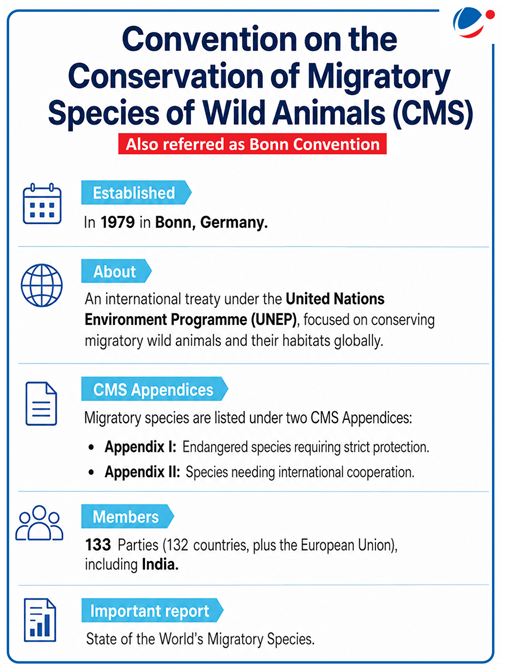
The initiative was launched at the COP15 to the Convention on the Conservation of Migratory Species of Wild Animals (CMS), held in March, 2026 at Campo Grande (Brazil).
About Global Initiative on the Taking of Migratory Species (GTI)
- About: It is a collaborative global effort between governments, conservation organizations, local communities, etc. to address the drivers of illegal and unsustainable taking.
- State of the World’s Migratory Species report 2024 identified that illegal and/or unsustainable taking threatens the survival of 70 % of all the 1,200 species listed under the Convention.
- As per the report, domestic drivers such as hunting, fishing for food, sale, sport, medicine, etc. are the key reasons for taking of migratory species.
- Aim: to provide support to countries meet their biodiversity commitments, such as species recovery and preventing extinction under the Kunming–Montreal Global Biodiversity Framework.
- 4 focus areas of work: Improve data and monitoring; Strengthen legal and policy frameworks; Enhance community engagement and Raise awareness.
- Partner organizations: Convention on Biological Diversity (CBD), UN Environment Programme (UNEP), World Conservation Monitoring Centre (UNEP-WCMC), World Wide Fund for Nature (WWF) and TRAFFIC etc.
Released by UN Department of Economic and Social Affairs (DESA), it highlights role of Sevilla Commitment to reverse current trends in financing for development.
Key Issues Highlighted
- Fragility in global economy: Challenging macroeconomic situation with significant downside risks.
- Low per capita income (one in four developing countries have it below 2019 level); protected conflict in Middle East causing impact on energy prices, trade, etc.
- Financing Squeeze: Many developing countries face high borrowing costs and heightened rollover risk; Only Marginal increase in Tax revenue in developing countries in past two decades, etc.
- More Fragmented World: Affecting international financial and development cooperation architecture in cross-border payment system, e.g., emergence of alternatives to Society for Worldwide Interbank Financial Telecommunication (SWIFT), etc.
Priority Actions and Recommendations
- Scaling Financing: Close estimated $4 trillion SDG financing and investment gap through strengthening domestic private sectors, supporting diversification, etc.
- Aligning finance with Sustainable Development Outcomes: Ensuring quality, impact, and alignment with country-owned strategies on both private and public finances.
- Strengthening Resilience: Building stronger domestic institutions and integrating climate and disaster risk considerations into financial instruments.
- Multi-layered approach to Cooperation: Stronger linkages between national development banks, regional and multilateral institutions, etc.
- Role of Multilateralism: Predictable, rules-based international system to lower risks, foster investment, etc.
About Sevilla Commitment
|
India’s first bat assessment highlights threats and major data gaps.
- The report is prepared by Nature Conservation Foundation, Bat Conservation International, etc.
Key Findings
- Species Diversity: ~135 bat species recorded, of which 16 are endemic.
- Seven species are listed under the threatened category by IUCN.
- Threats: Urbanisation, deforestation, climate change, and stigma post COVID-19.
About Bats
- Bats are mammals (give birth to live young), have fur covered bodies, and warm blood.
- They are the only mammals that can undertake true powered flight.
- Echolocation: Most bats use high-frequency sound waves to navigate and hunt in total darkness.
- Significance: Provide key ecosystem services like pollination, pest control, and seed dispersal.
Scientists discover new frog species in Arunachal Pradesh, Limnonectes Motijheel.
About the new Frog Species
- It belongs to a group commonly called Fanged Frogs, named for small, fang-like projections in the lower jaw of the males.
- These frogs are found across South and Southeast Asia and are known for their unusual breeding habits.
- Unlike most frogs that lay eggs in water or on leaves, this species builds a nest out of mud beneath leaf litter on the forest floor.
- This is a behaviour not previously recorded in this group from India.
Recently scientists discovered fossils in foothills of Shivalik Himalayas, in Saharanpur district, UP.
- It is the first fossil record of gourami in India and only the second known globally.(1st in Sumatra, Indonesia)
- Fossils date back 5 million years (Pliocene Epoch.)
- It is first discovery of aquatic fossils in a region earlier known only for terrestrial remains.
A recent study has warned of a potential collapse of AMOC, having profound impact on global climates.
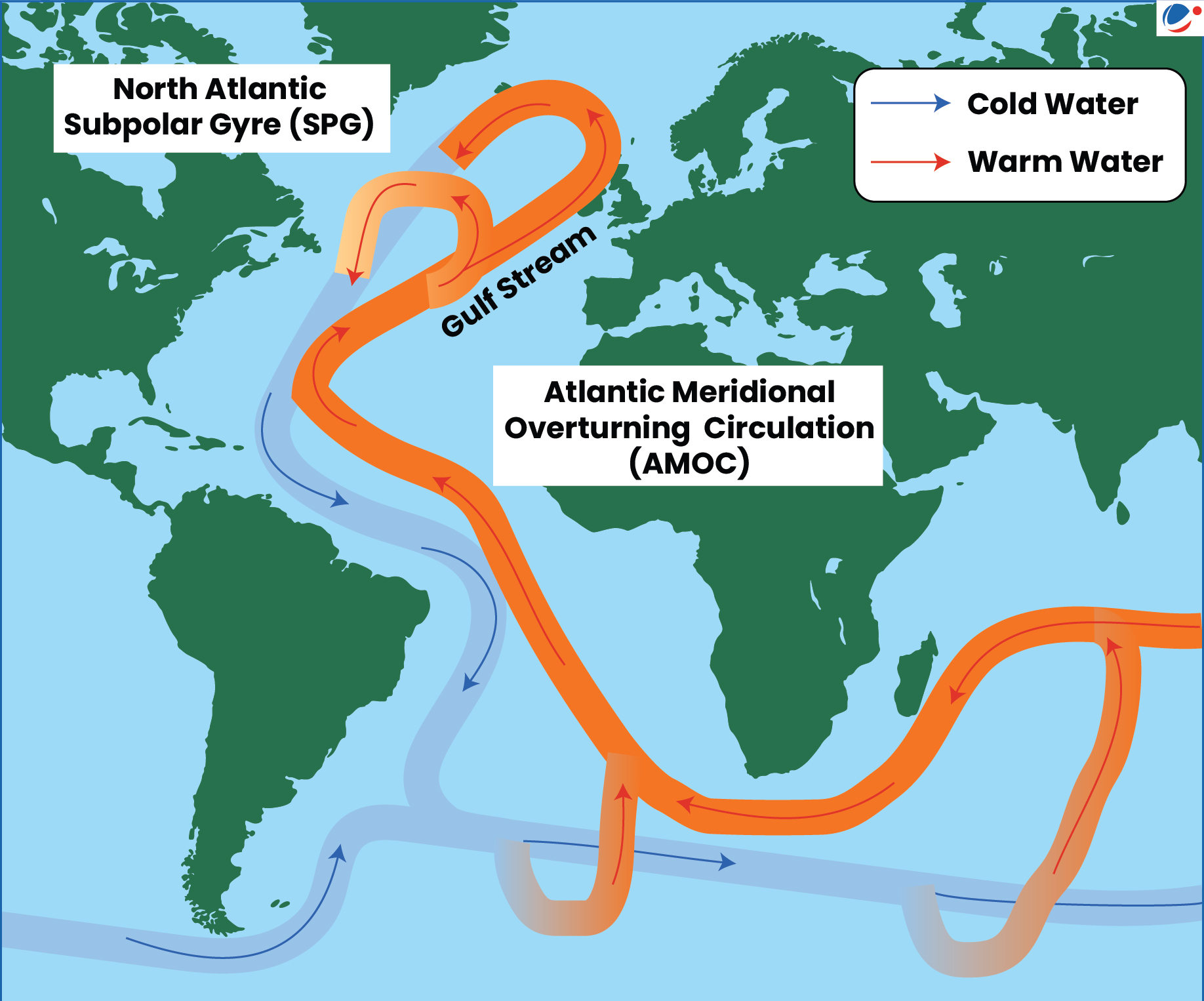
What is Atlantic Meridional Overturning Circulation (AMOC)?
- It is a system of ocean currents that circulates water within the Atlantic Ocean, bringing warm water north and cold water south.
- This circulation is driven by differences in temperature and salinity, which create differences in water density, a process known as thermohaline circulation.
- Process:
- AMOC brings warm, salty water from the Gulf of Mexico to the north Atlantic, keeping temperatures in western Europe milder than in Canada or Russia.
- The dense water then cools and sinks, moving south on the seafloor along the western Atlantic.
- It eventually rises again through upwelling, warms up, and restarts the cycle.
- Significance: Part of the large "global conveyor belt," it circulates water, heat, and nutrients throughout the Atlantic Ocean.
Why is AMOC Collapsing?
- Climate Change induced Freshwater influx: Greenland's melting ice sheet has added ~5,000 km³ of freshwater into the subpolar North Atlantic Ocean.
- Freshwater reduces the ocean's salinity and density, which slows sinking of water, resulting in weakening AMOC.
What are the potential implications of collapse of AMOC?
|



