


Why in the news?
New government was recently elected in Nepal.
Overview of India-Nepal relations | |
Border
| Pillars of the Relationship
|
Economy & Trade
| Defence cooperation
|
Connectivity projects
| Emerging areas of partnership
|
Other Key areas of cooperation:
| |
Key Challenges in India-Nepal relations
- Political volatility: The changing government in Nepal often leads to inconsistent long-term domestic policy plans and foreign relations, particularly with neighbouring countries.
- Nepal's political instability since the 2008 abolition of the monarchy is primarily driven by fragile coalition politics, deep-rooted factionalism, and a series of corruption scandals.
- Since 2014, there have been 17 exchanges at the level of Head of State/ Head of Government between India and Nepal.
- Issues related to Customs and border trade: E.g., Recently, newly elected Nepal government's enforced customs duties on goods valued above NRS (Nepalese Rupee) 100 brought from India (although Nepal's Supreme Court issued an interim stay on Balen Shah-led government decision).
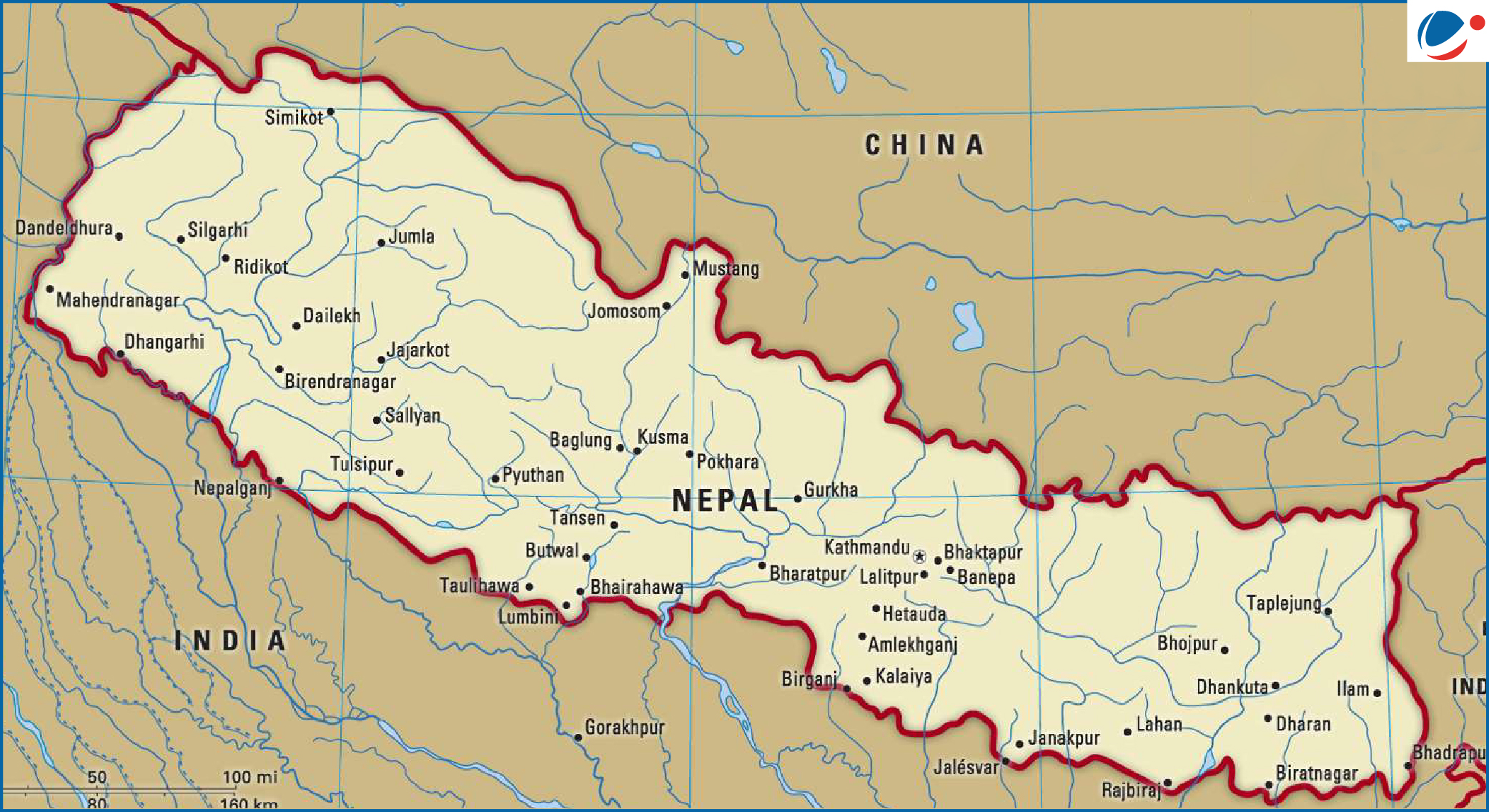
- Border dispute: In 2020, Nepal released a new political map claiming Kalapani, Limpiyadhura and Lipulekh as part of its territory.
- Nepal argues that these areas, located east of the Mahakali River, belong to it under the 1816 Treaty of Sugauli.
- The border dispute resurfaced in 2025 when India and China moved to resume the Kailash Mansarovar Yatra through the Lipulekh Pass.
- China Competition: E.g., After the 2015 trade blockade by India, Nepal diversified its trade by deepening ties with China and in 2017, joined China's Belt and Road Initiative (BRI).
- Economic Disruptions: Major joint initiatives like the Pancheshwar Multipurpose Project, Arun III, Upper Karnali, etc. delayed due to political deadlocks and a growing trust deficit.
- Security issues: As per some reports, open border with Nepal is being misused by terror groups/Organized Crimes groups for supplying trained operatives, circulation of fake Indian currency, smuggling etc.
- Gurkha Recruitment Issue: India's Agnipath Scheme, which alters the terms of military recruitment, including that of Gurkhas, has led Nepal to suspend recruitment under the new framework.
Conclusion
The transition led by the Gen-Z movement in Nepal offers an opportunity to achieve political stability, eliminating uncertainty, addressing existing gaps and promoting a more inclusive and representative political environment.
India's foreign policy towards Nepal operates under its "Neighbourhood First" framework, shifting from political management to "quiet diplomacy". It is focused on delivering High-Impact Community Development Projects (HICDPs) in priority sectors such as health, education, drinking water, sanitation, drainage, rural electrification, hydropower, etc. to improve the overall quality of life of Nepalese citizens at the local level.


